
Dental Crowns
River North, IL
A damaged tooth doesn't always need to be removed. In many cases, a carefully designed dental crown can protect the remaining tooth structure, restore comfortable function, and give you back a natural-looking smile.
At River Village Dental, Dr. Chris Park, DDS, provides customized dental crowns for River North, IL, patients with teeth affected by decay, fractures, large fillings, root canal treatment, wear, and cosmetic imperfections. Each restoration is selected and designed according to the tooth's condition, location, bite, and your aesthetic goals.
What Is a Dental Crown?
A dental crown is a custom-made restoration that fits over the visible portion of a tooth. Often called a "cap," it surrounds and protects the remaining tooth structure while restoring its shape, size, strength, and appearance.
Crowns can be used for both restorative and cosmetic purposes. A properly designed crown should blend with your surrounding teeth while allowing you to bite and chew comfortably.
At River Village Dental, Dr. Park carefully evaluates each tooth before recommending a crown. The objective isn't simply to cover a damaged tooth; it's to create a restoration that supports the health, function, and appearance of your smile.
Do You Need a Dental Crown?
A crown may be recommended when a tooth has suffered more damage than a conventional filling can reliably repair.
You may be a candidate for a dental crown if you have:
- A severely weakened tooth
- Extensive tooth decay
- A large existing filling
- A cracked or fractured tooth
- A tooth that has undergone root canal therapy
- Significant tooth wear
- A severely discolored tooth
- A misshapen tooth
- A dental implant that needs a restoration
- A missing tooth that will be replaced as part of a dental bridge
The best treatment depends on how much healthy tooth structure remains and what caused the damage.
Choosing the Right Dental Crown Material
Not every tooth has the same requirements. The ideal crown material can depend on the tooth's location, bite forces, cosmetic considerations, and overall treatment goals.
At River Village Dental, we offer several crown materials, including:
All-Ceramic and Zirconia Crowns
Metal-free ceramic restorations, including zirconia, offer an attractive combination of strength and aesthetics.
Their tooth-colored appearance can make them particularly appealing when restoring visible teeth where a natural-looking result is important.
Porcelain-Fused-to-Metal Crowns
Porcelain-fused-to-metal, or PFM, crowns combine a metal foundation with a tooth-colored porcelain exterior.
They may be appropriate in certain situations where durability and aesthetics both need to be considered.
Gold Crowns
Gold may be recommended for specific cases where its material properties make it a suitable choice.
While gold isn't tooth-colored, its strength and durability can make it useful for certain teeth and patients.
Dr. Park considers your individual circumstances before recommending a material rather than automatically using the same crown type for every patient.
What Happens During the Dental Crown Process?
Your crown treatment is customized according to the condition of your tooth and the type of restoration you need.
1. Examination and Treatment Planning
Dr. Park will examine the affected tooth and surrounding structures to determine whether a crown is appropriate.
We'll discuss the condition of your tooth, your treatment goals, and the available restoration options.
2. Tooth Preparation
If a crown is recommended, the tooth is carefully prepared to create sufficient space for the restoration while preserving as much healthy structure as possible.
3. Digital or Traditional Impressions
Detailed information about your prepared tooth is captured so the dental laboratory can fabricate a crown that fits your mouth accurately.
4. Temporary Protection
A temporary restoration may be placed while your permanent crown is being fabricated. This helps protect the prepared tooth during the interim period.
5. Crown Try-In
Once your permanent crown is ready, Dr. Park will evaluate its fit, appearance, contacts, and bite.
Any necessary adjustments can be made before the restoration is permanently placed.
6. Final Placement
Once everything meets the necessary standards for fit and function, the crown is securely bonded or cemented into position.
The goal is a restoration that feels comfortable and works naturally with your bite.
How Should You Care for a Dental Crown?
A crowned tooth still requires regular dental care.
You should:
- Brush at least twice a day
- Floss every day
- Clean carefully around the crown
- Use a floss threader when necessary
- Avoid chewing excessively hard objects
- Address teeth grinding or clenching
- Maintain routine dental examinations
- Schedule professional cleanings as recommended
If your crown supports a dental bridge, special attention should also be given to cleaning underneath the replacement tooth, known as the pontic.
Good oral hygiene helps protect the crowned tooth and the surrounding gums from decay and periodontal disease.
How Long Can a Dental Crown Last?
Dental crowns are designed to provide long-term service, but their lifespan depends on several factors.
Your oral hygiene, bite forces, diet, habits, underlying tooth health, and regular dental maintenance can all affect the longevity of a restoration.
A crown doesn't make the underlying tooth immune to dental problems. Decay can still develop around the margins if oral hygiene is neglected.
Regular examinations allow Dr. Park to monitor the condition of your crown and identify potential problems early.
Dental Crowns vs. Fillings: Which One Do You Need?
The right restoration depends largely on how much healthy tooth structure remains.
A dental filling may be appropriate when the damaged area is relatively small and enough healthy tooth remains to support the restoration.
A crown may be more appropriate when the tooth is significantly weakened, extensively restored, cracked, or missing substantial structure.
Dr. Park will evaluate your tooth and recommend the most conservative treatment capable of providing the protection and function you need.
What If a Tooth Cannot Be Saved?
A crown is designed to restore a tooth that still has enough healthy structure to support it. However, some teeth may be too severely damaged or compromised to restore predictably.
If a tooth cannot be preserved, Dr. Park can discuss appropriate replacement options.
Depending on your circumstances, these may include a dental implant and crown, a dental bridge, or another restorative solution.
The goal is always to develop a treatment plan that protects your overall oral health while restoring your ability to smile and function comfortably.
FAQs About Dental Crowns

Book Your Dental Crowns Consultation
Near River North, IL Today!
A weakened or damaged tooth doesn't have to remain a source of discomfort or embarrassment. A custom dental crown can restore protection, function, and a natural-looking appearance while helping you preserve your smile.
Call 312-300-7385 or book online to schedule your dental crown consultation and take the next step toward a stronger, healthier-looking smile.
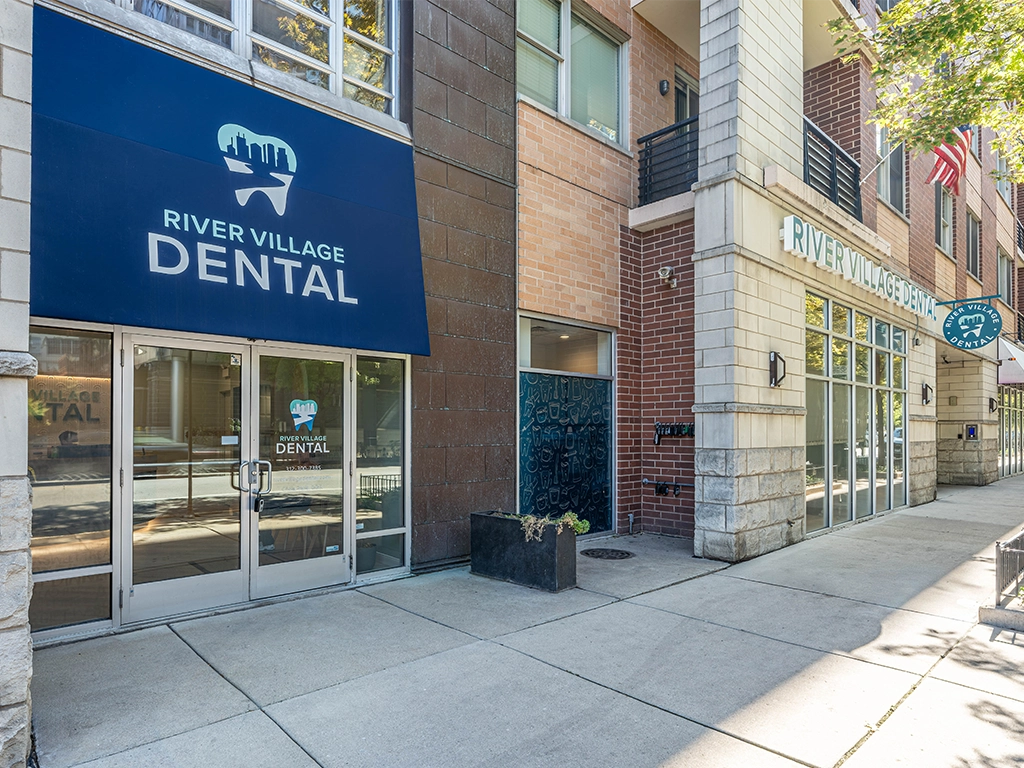
Think great dentistry can’t feel like home?
Think again—we’re redefining the neighborhood dentist.
At River Village Dental, we strive to provide our valued patients with the highest quality care in a warm, inviting atmosphere. We work tirelessly to offer a small-town feel in the heart of Chicago, ensuring every visit is comfortable and every smile transformation is remarkable.